

The vast majority of properties in the country are under-insulated. The situation is the same here in Savannah, GA, and the surrounding areas. At The Energy Penguin, our mission is to help as many property owners in the area improve their home’s energy efficiency.
As one of the best crawlspace and attic insulation companies in Savannah, we offer the perfect combination of services to improve your home’s energy efficiency.

Are you looking for a crawlspace or attic insulation contractor for new installations or insulation upgrades? The Energy Penguin is the name to trust.

Energy audits highlight parts of the property that drain energy efficiency. Book an audit to find where air enters or escapes your property.

Make your roof waterproof and prolong its lifespan with a quality elastomeric coating. Give your roof another layer without breaking any local codes.


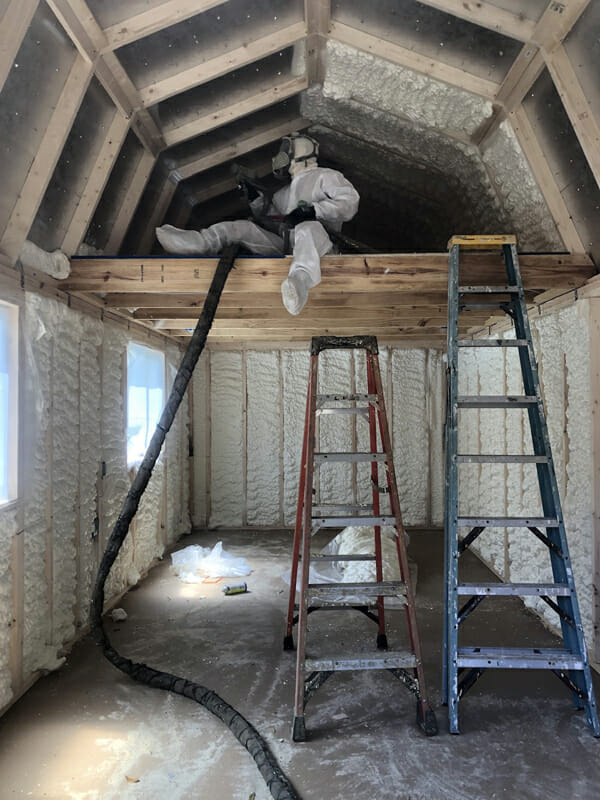
The Energy Penguin is an award-winning crawlspace and attic insulation contractor with years of experience helping property owners in the Low Country region enjoy comfortable, energy-efficient spaces. We proudly offer residential and commercial solutions.
We are a small local company with a clear understanding of the unique environmental challenges of the Savannah, GA, area. We know what works and what doesn’t, so it’s no surprise that we’ve quickly built a reputation among the locals.
Reach out to our team today for custom solutions.
Some of the top benefits of crawl space and attic insulation include the following:
Better temperature regulation: Quality insulation prevents heat transfer through and from your floors, ceilings, and walls.
Reduction in humidity levels: Proper insulation can keep out moisture, ensuring mold and mildew can't thrive in your attic or crawlspace.
Lower energy bills: Plugging air gaps lowers the strain on your HVAC systems, reducing your energy bills.
To enjoy these benefits, request a free home insulation consultation today.
At The Energy Penguin, we offer the main types of insulation to our residential and commercial customers across Savannah, GA, including spray foam and fiberglass insulation.
Quality spray foam insulation can significantly improve the R-values (thermal ratings) of any space. It’s the best attic insulation method because it can cover cracks and crevices wherever they may be. The efficacy is because the insulation material starts as a liquid but thickens into a tough foam as it cures.
Meanwhile, fiberglass insulation is one of the most popular methods of insulation for property owners in the Savannah, GA, area. The bulk of the process involves rolling or laying out fiberglass bats across the floor, ceiling, and wall cavity.
At The Energy Penguin, we can also offer fiberglass blown attic insulation for corners that are harder to insulate with batts.
Most Savannah homes with a vented, dirt-floor crawl space need one. The ground under coastal Georgia homes stays damp most of the year, and that moisture rises into the crawl space as water vapor. Over time, it can cause musty smells, mold on the floor joists, wood rot, soggy insulation, and even sagging floors. A vapor barrier stops that moisture at the source. Installers roll heavy plastic sheeting across the dirt, overlap the seams, and tape them to help prevent vapor from slipping through. Many pros go thicker than the common 6-mil baseline because heavier sheeting holds up better when someone crawls over it later. Keep in mind that a barrier blocks ground moisture but won’t fix standing water or poor drainage, so you need to address those problems first.
Yes, and you’ll feel it most in the summer. On a July afternoon, the sun bakes your roof, and the attic can climb well past 130 degrees Fahrenheit. Without enough insulation, that heat pushes down through your ceilings, and your AC spends all day fighting it. Good attic insulation slows heat transfer, so rooms stay cooler, and the system runs less often. Humidity also matters. Muggy outdoor air sneaks in through gaps around attic hatches, recessed lights, and plumbing pipes, forcing your AC to remove that moisture while also cooling the house. Sealing those gaps and adding insulation tackle both problems at once. The same insulation also keeps your heat inside on those chilly January nights.
Start by looking in your attic. You probably need more if you can see the tops of the ceiling joists. The U.S. Department of Energy recommends R-30 to R-60 for attic insulation in our climate, which typically corresponds to roughly 12–24 inches of blown fiberglass, depending on the product. Flattened, stained, damp, or patchy insulation also needs attention, since damaged insulation can’t slow heat the way it should. Your house drops other hints, too. Rooms that never cool off, an upstairs that’s warmer than downstairs, an AC that runs nonstop, and creeping power bills can all point to missing insulation, air leaks, or duct problems. Wear a mask up there and step only on the joists.
Spray foam is usually the better choice when air leaks or attic ductwork are the main problems, while fiberglass makes more sense for topping off an open attic floor or insulating standard walls. Because spray foam expands into cracks and gaps, it insulates and air-seals in one step. That’s a big help in Savannah, where many homes have the AC unit and ducts in the attic. With foam on the underside of the roof deck, the attic stays close to indoor temperatures, so those ducts aren’t baking all summer. Most attics do fine with open-cell foam, while denser closed-cell foam resists moisture and works well in crawl spaces. Batts and blown-in fiberglass are proven and simple to install, making them a great fit for walls in new construction and for attics already in decent shape. A good contractor checks your attic, ducts, and moisture levels before making any recommendations.
An insulation contractor inspects, installs, and upgrades insulation to keep Savannah’s summer heat out and your winter warmth in. Most jobs start with an inspection of the attic, walls, and crawl space, where the contractor checks how much insulation you have, its condition, and where air or moisture is entering. Then they recommend a material and install it. Depending on the home, that could mean blown-in or batt fiberglass, open- or closed-cell spray foam, or a crawl space vapor barrier. Many contractors also insulate new construction, upgrade older homes, and conduct energy audits to identify where a house loses energy. Around Savannah, a good local pro also watches for moisture because trapped humidity ruins insulation and feeds mold and rot.
FAQs reviewed by Dylan Howell, owner of The Energy Penguin, a local insulation contractor serving Savannah, GA, and beyond.
Are you looking for companies that insulate homes and commercial spaces in Savannah, GA? Call The Energy Penguin today at 912-503-5360 to work with the best crawlspace and attic insulation contractor in the area.